
Illustrations
Turn one drawn motif into a tidy invitation border

A hand-drawn leaf can make a lovely invitation border, but redrawing it around every edge may leave an uneven row of sizes and angles. Turn the finished motif into a stamp in Procreate, then place each copy deliberately. The brush can keep the mark consistent; the spacing and corners still need your eye.
Draw a motif that survives repetition
Start with your own simple drawing and check its outline before multiplying it. A crowded cluster may look clear on its own yet become a dark strip when repeated at invitation size. Leave space around the motif so neighbouring copies can sit apart. Keep the original drawing on a separate layer.
For a straightforward single-colour stamp, prepare the motif in white on a black square canvas. The light parts of the brush source make the mark, while black stays transparent. This is a shape source, so it will not preserve a painting’s original collection of colours. Use a small monochrome flower or leaf for this first border.
Make the mark stay put
Create a brush in the set you want to keep it in, then use Shape, Edit and Import to paste the copied source. Procreate’s Brush Studio handbook explains that a brush stroke repeats its shape along a path. Increasing Stroke Path spacing makes those separate impressions visible. For a stamp placed one tap at a time, push Spacing to Max and test the result on the Drawing Pad.
If a short tap leaves several overlapping copies, check Shape Count and set it to 1, with Count Jitter at 0%. For equally sized, equally opaque impressions, remove the Apple Pencil pressure response from Size and Opacity. The walkthrough for making a stamp brush from your own drawing covers those controls and the fixes for faint or misplaced marks.
A leaf that turns with the Pencil needs a different adjustment. In the current Procreate 5.4 controls, Shape Input style set to Touch only lets the Rotation setting govern the shape. Rotation at 0% keeps its direction fixed, and Scatter at 0% avoids random turns. Turn Randomized off as well; it can rotate the shape at the start of each stroke. If the orientation changes when you rotate the iPad, turn off Properties, Orient to Screen so the brush keeps its direction relative to the canvas.
Try a few light and firm taps on a spare layer before working around the invitation. Compare their angle as well as their size. Keep useful variation when it belongs to the drawing, but correct an accidental tilt or faded copy before repeating it across a long edge.
Leave room for the corners
Put the border on its own layer above the invitation background. Choose the motif size with the wording visible, since a border that looks delicate on an empty page may compete with names and dates. Begin with one edge and leave the corner areas clear until you can see the rhythm of the row.
Judge the gaps between the visible leaves, not only the points where you tap. An asymmetric motif can make evenly placed taps look uneven. Adjust the row before filling the remaining edges, and try the corner arrangement separately. A small open corner is often cleaner than squeezing in one more leaf.
Keep an editable copy of the invitation before preparing the delivery file. If the wording changes or the printer requests another size, use the layer and canvas guides at The Procreate to work through the revision. Recheck the border afterwards; reducing the whole design can make previously separate marks run together.
View the finished invitation at its intended size and read the smallest line of text. Confirm the printer’s dimensions and margins before sending a file, then inspect the saved export rather than relying on the open canvas. A paper proof is useful for judging whether the border leaves enough space around the words.


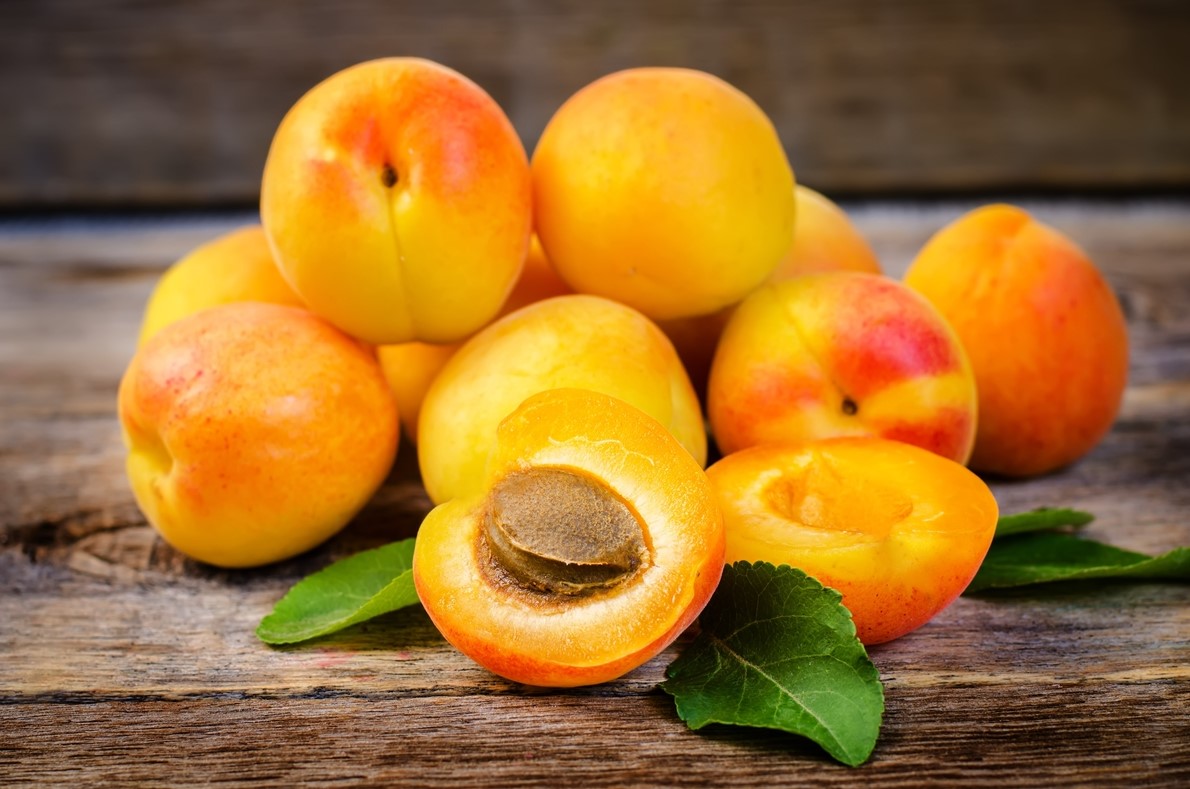
Apricots are one of the most versatile fruits. It’s one of the healthiest fruits in the world too. They are rich in nutrients. Vitamin A in the fruit boosts eye health and immunity, the fiber takes care of digestive health. The fiber does well to your heart by regulating the levels of blood pressure and cholesterol.
The top list of health benefits of apricots is shown below.
Improves skin health
The combination of Vitamin C, A, and phytonutrients ensures good skin. The antioxidants in the apricot also slow the aging process. So apart from a good skincare regime, eating apricots regularly also helps.
Improves digestive health
The apt amount of dietary fibers is responsible for good gut health. The soluble fiber in the fruit promotes healthy bowel movement. The fiber also breaks down the fatty acids fast – and this enhances digestion. It also treats other digestive issues like constipation and bloating.
Improves bone health
Calcium is much required in the formation and development of bones, and apricot has lots of it. Without enough potassium in the body, the calcium is not absorbed and disposed of uniformly. Apricot has both of them.
Prevents anemia
Any plant product that contains iron has non-heme iron, and that includes apricot. This type of iron takes its time to be absorbed by the body, and the longer it stays in the system, the better your chances of preventing anemia. It’s recommended that you take some vitamin C along with it to ensure better absorption of the non-heme iron.
Improves heart health
Given that the fruit is high on fiber content, it helps to reduce the bad cholesterol content in the body, and that means your heart is protected. And at the same time, it increases the good cholesterol. Plus, the potassium content in the fruit balances the electrolyte levels in our system, keeping our heart muscles in order. All you have to do is eat one or two fresh apricots every day, or a handful of dried ones.

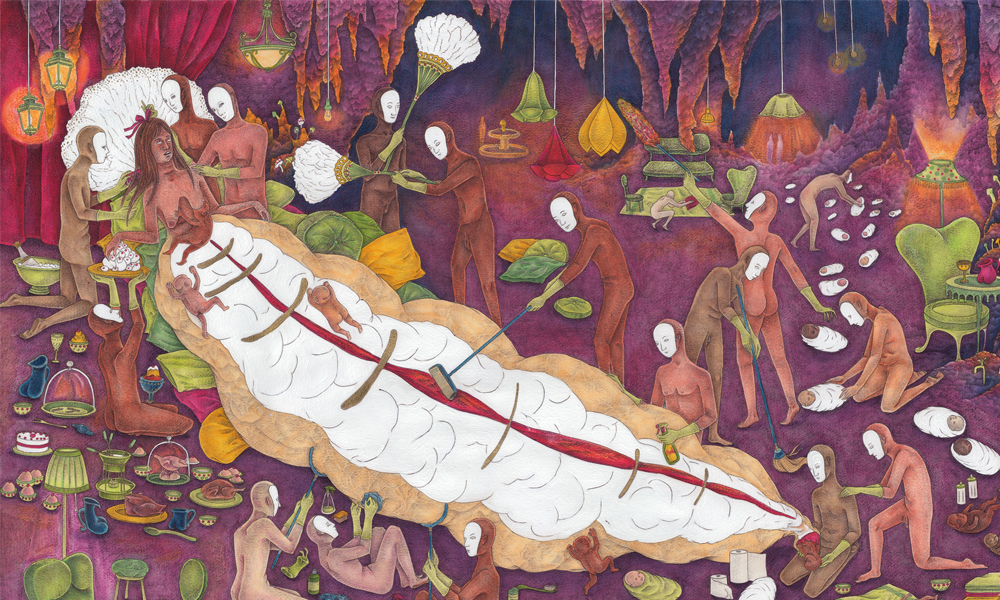
What is art if it is not political? These captivating illustrations raise perennial but modern questions about what it means to be a woman today.
Text Credit: Rheanna Mathews
A look at canonical art shows more men as artists than women, and perhaps this fact may contribute to the argument that it is simply because men are better at everything, including art. This attitude elected to overlook the element of opportunity and how it was denied to women, choosing instead to belittle the subjects chosen by women for their art, terming them – with a snide curl of the lip – ‘women’s issues’. It took centuries for women to claim a place in the canon, and decades for them to reclaim their ‘issues’.
The feminist movement largely helped pave the way, and the social media revolution has ensured that women’s issues and their experiences are out in the open and cannot be ignored. Not only has this given rise to whole generations unafraid of repossessing their agency, it has also seen art itself become more diverse and intersectional.
The three artists featured here are unafraid to address issues that society is grappling with today, from perspectives that bring women and minorities to the fore. Their recognisable individual styles uniquely raise questions concerning the modern woman, her body, her sexuality, her very existence.
We are at a point in time when leaders of state repeal funding for abortion, government reforms do nothing to help and in fact actively make difficult the life of a woman, and mainstream society tries to fit her into a uniform box of their design…a point where the fact that she is a woman makes her a subaltern. From the striking, dreamlike scenes of Janine Shroff to the brightly coloured, eye-catching poster illustrations of Kruttika Susarla and Sreejita Biswas, the featured illustrations not a comprehensive look at these issues, but are from different points in the spectrum, with respect to the questions they raise, and in terms of the manner in which they are expressed.
Artist: Janine Shroff
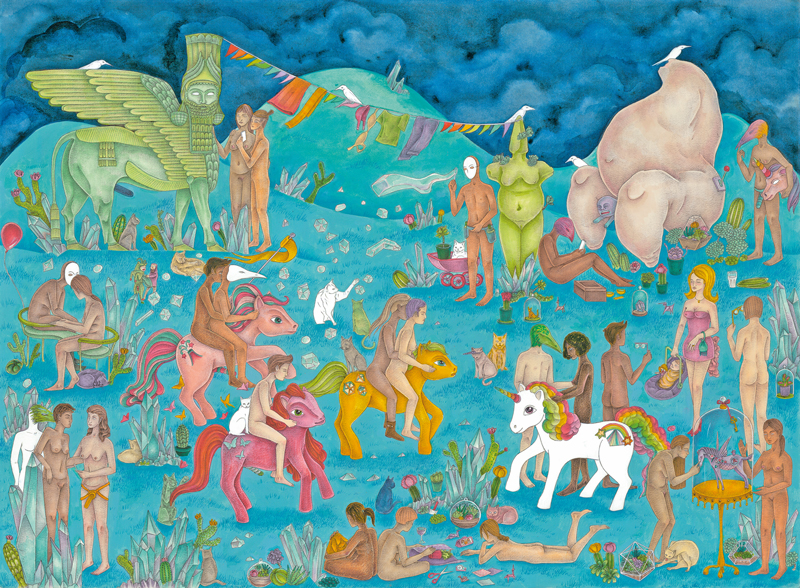
Lesbians Riding Ponies
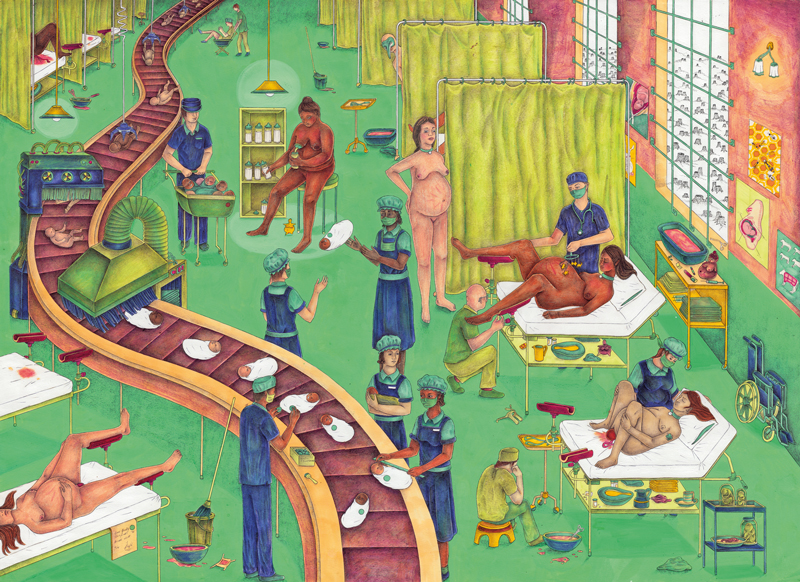
The Breeders
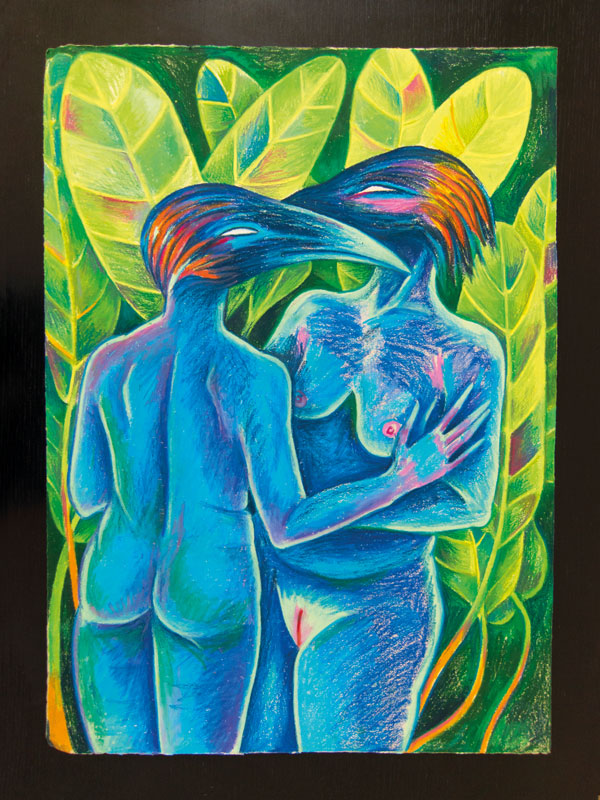
Blue Birds: Quick Sketch
Artist: Kruttika Susarla
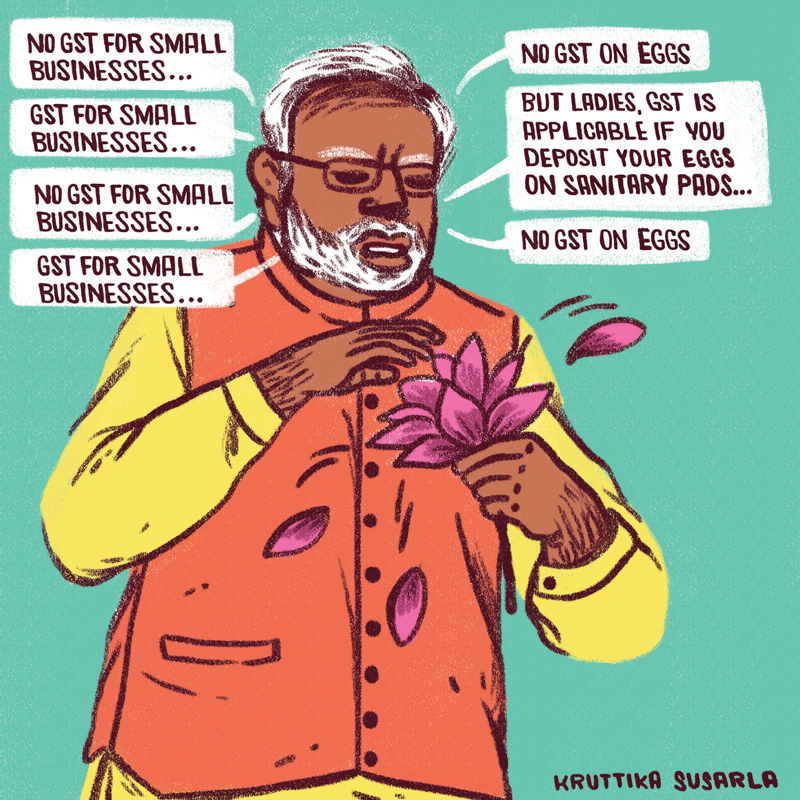
In response to the government’s GST rollout and poor planning around women’s health and sanitation
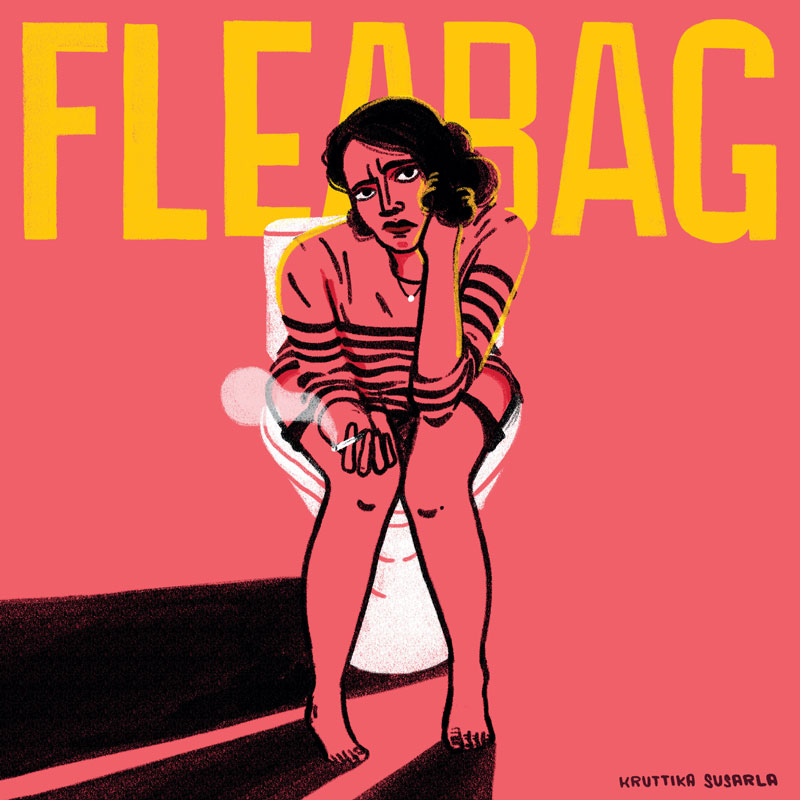
Fanart for web-show, Fleabag, a dark comedy based on the notion of ‘a bad girl’
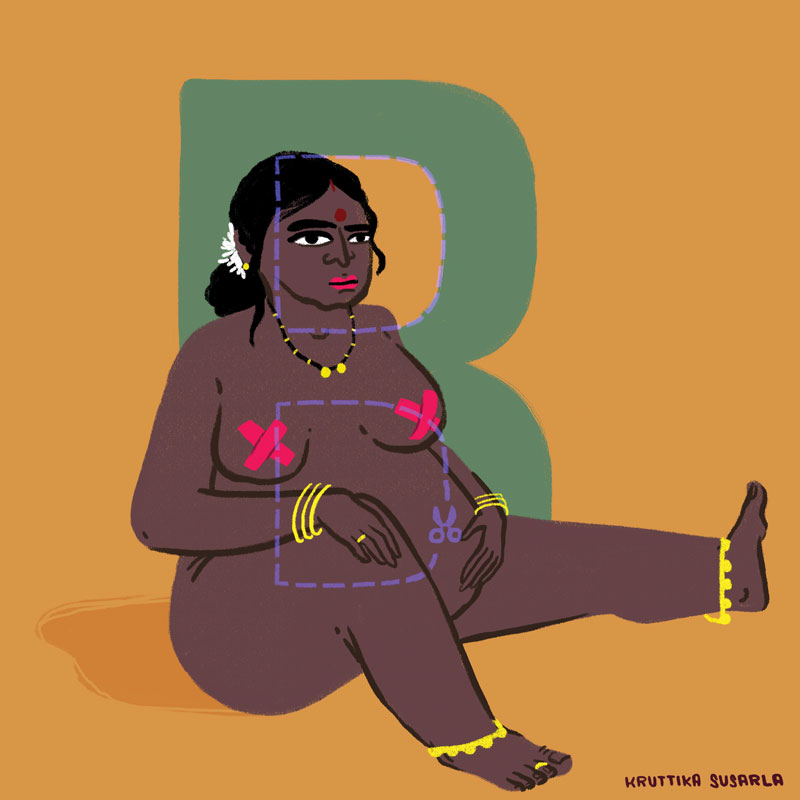
From The Feminist Alphabet series, contextualising feminism within the lived experience of women and minorities in India
Artist: Sreejita Biswas
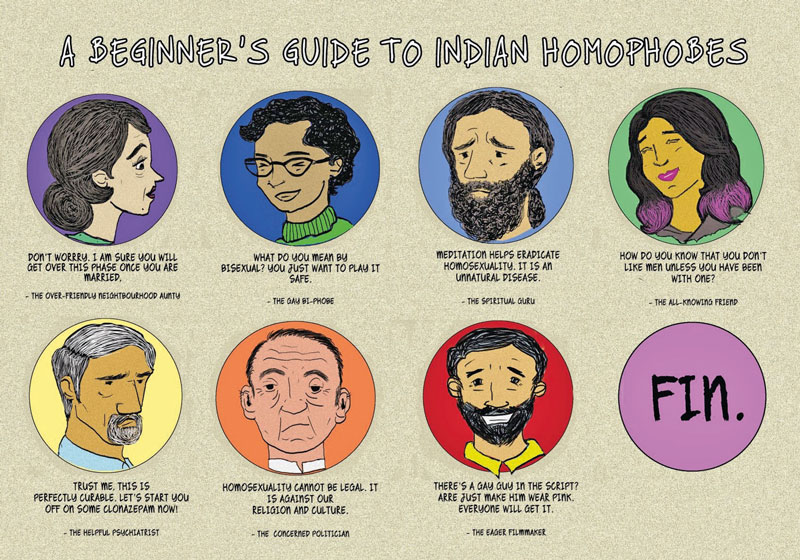
A Beginner’s Guide to Indian Homophobes
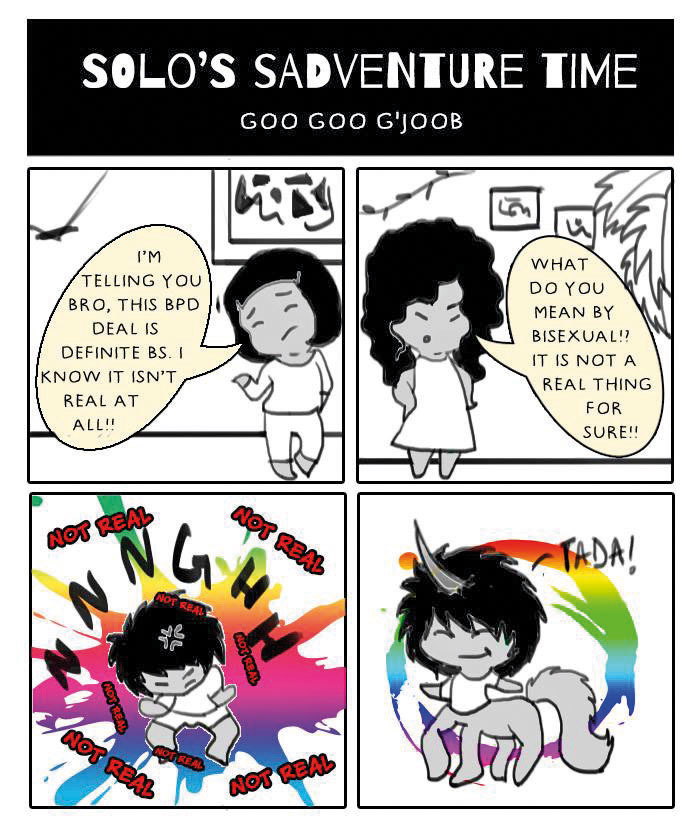
Solo’s Sadventure Time: A lighthearted take on being a queer feminist with BPD in India
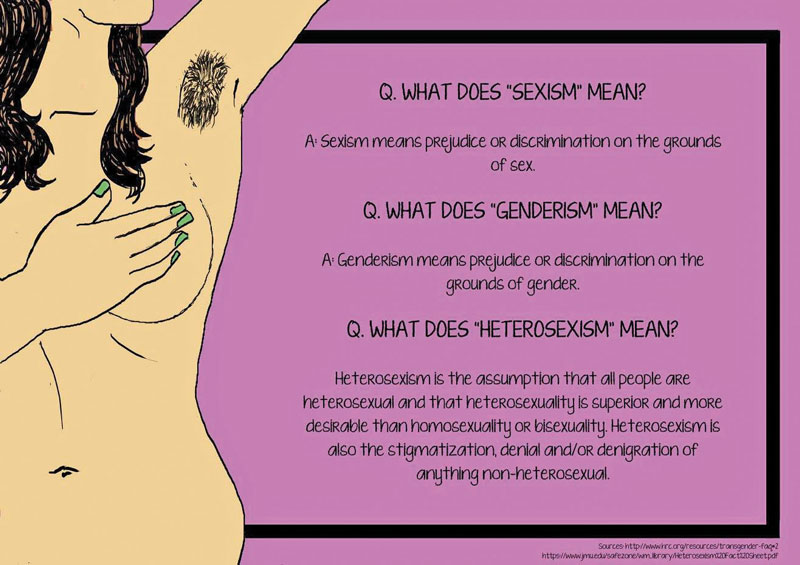
Frequently Asked Questions (FAQs) About Sex, Sexuality and Gender

Transgenders Who Are Conquering The Makeup Industry In Kerala

3 Malayali Fashion Designers Who Are Redefining Fashion Beliefs

Ten Malayali Bloggers That You Should Be Following

Top 5 Rock bands from Kerala that you need to check out right now!

South Indian Actors Who Adorned Their Body With Tattoos

Th(INK)ing Out Loud: Malayali Celebrities Who Flaunt Their Tattoos With Pride

Saniya Iyappan – All Set To Conquer The World Like A Queen

AND SHE WAS – Kani Kusruti Photoshoot

Ask Me A Question, The Latest Instagram Feature And How Mollywood Responded To It

Take Note of these cute Baby Products from Pearle Maaney’s Feed
Turn one drawn motif into a tidy invitation border

THE QUIET FORCE OF A MODERN ICON

Self-Care in the Digital Age: Disconnecting to Reconnect

Bridal Guide: Top Bridal Fashion Trends of 2025

Navratri 2024: Celebrating the Nine Colours and Their Significance

Coffee Pairing: Foods That Complement Your Morning Brew

Popular Curtain Fabrics to Consider for Your Home

InstaGlam : Best of Instagram from Nikhila Vimal

Harry Potter Star Maggie Smith, Beloved Professor McGonagall, Passes Away at 89

Andra’s Classic Kalamkari Sarees: A Timeless Craft

Aishwarya Lekshmi FWDLife Fashion Film

Saniya Iyappan | FWD Life The Reclamation Issue Fashion Film

The Reclamation Issue ft Saniya Iyyappan Teaser

Sunny Wayne And Reba John Dazzle In FWD Vivah’s Golden Gleam

7 Simple Steps For A Flawless Cocktail Makeup Look

Explore The Legacy Of Malabar At Courtyard By Kochi Marriott

Get Fashionable And Comfortable This Summer With FWD Picks

Italian Food Fest With Chef Marou At Kochi Marriott Hotel

Vijay Babu- New look, New Persona
